
Forged by Hand.
Guided by tradition.
I’m Marcin Grabowiec - blacksmith and knifemaker behind MG Forge.
Tamahagane (Wakou) is not “made.”
It is born.
Inside a clay tatara furnace, charcoal burns for days—pine turned to black fire. Iron sand is added again and again. The air is fed. The heat is watched like a living thing. And at the end… the furnace gives one child: kera—a heavy bloom of iron and carbon.
Not all of it is worthy.
Only the best inner pieces become true tamahagane.
Japanese sword making was built on this steel. And with that steel came the old promise: sharp enough to feel unreal… yet strong enough to survive.
I forge kitchen knives from pure tamahagane, using traditional katana techniques—refining, shaping, clay-coating, and water quenching. It’s a steel with a narrow path between success and ruin. Some blades crack. Some live. The ones that live carry a quiet presence you can feel the moment they touch food.
This isn’t just a knife.
It’s tatara fire—held in your hand.
Featured Knives

Tamahagane Honyaki Gyuto — custom order
Starting price: $1,600 USD
Optional traditional sword polishing: +$700 USD
Custom, forged‑to‑order. Let’s talk before you order.
This is a true Honyaki Gyuto—made from one piece of Japanese tamahagane. No cladding, no sandwich layers. Just tamahagane, shaped by hand and hardened the traditional way.
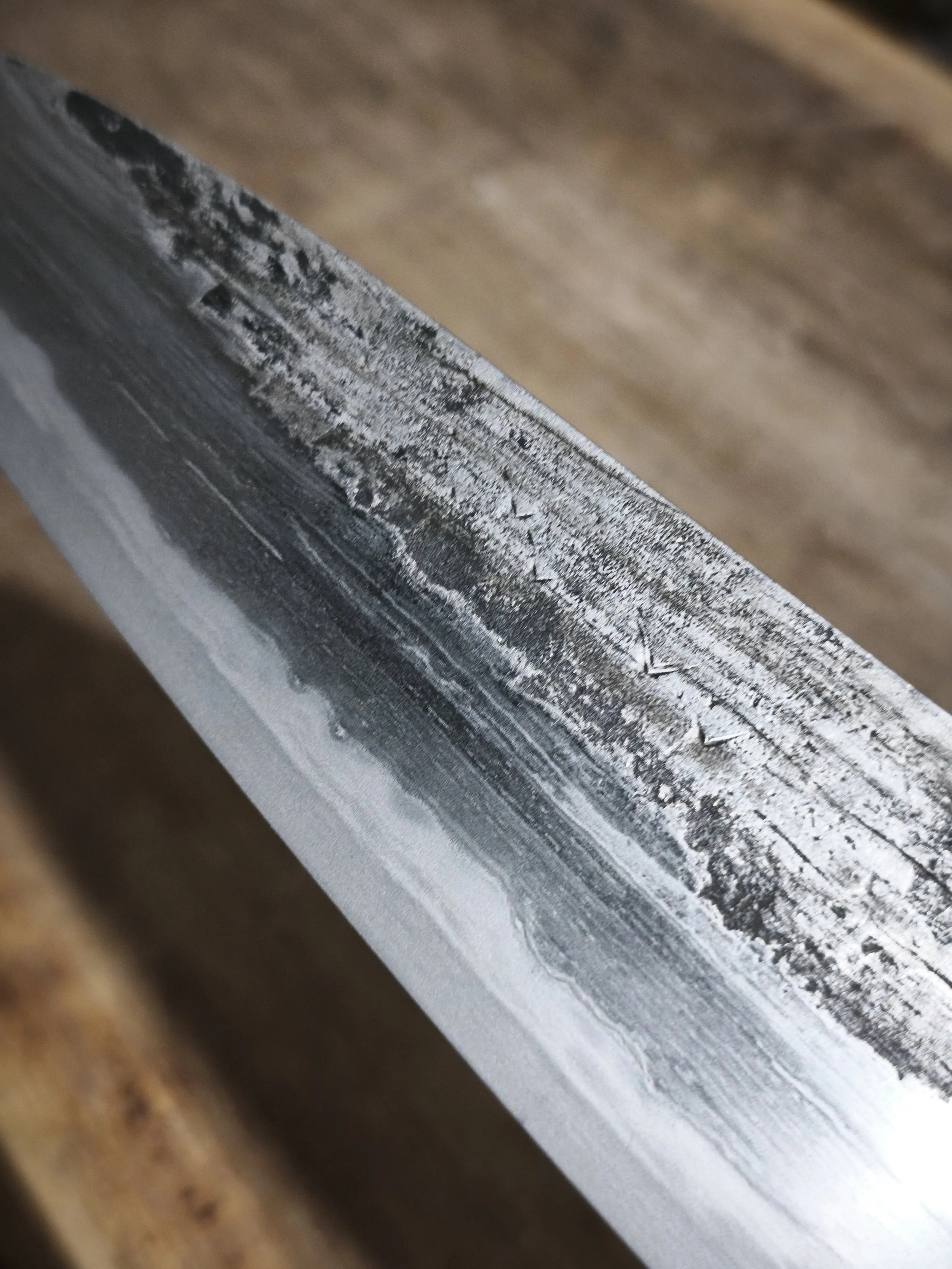
To refine the steel, it’s folded and forge‑welded 14 times, creating thousands of layers. That cleans and evens the steel, and leaves a subtle depth you only get from hand‑forged material.
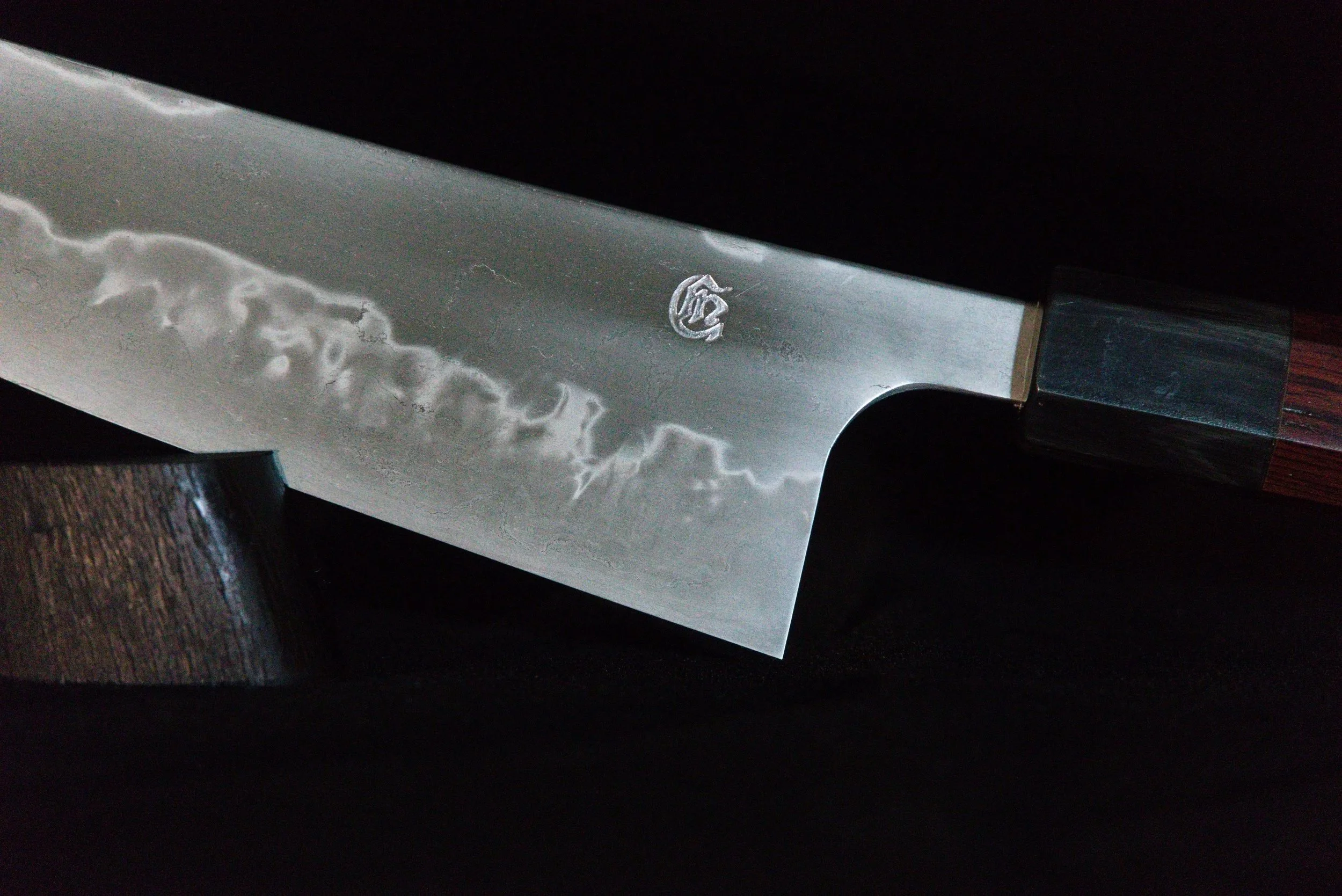
The signature is the hamon—the natural hardening line from clay heat treatment and water quench. It isn’t a pattern added later. It’s the visible border between two worlds:
a harder edge for cutting, and
a tougher spine for strength.
Tamahagane is sensitive and unpredictable, so every hamon is unique.
Hamon styles you can choose
Suguha — straight, calm, classic
O‑Choji — bold, larger clove waves
Ko‑Choji — tighter choji, refined and detailed
Notare — smooth rolling waves, elegant flow
Gunome — round, rhythmic peaks
My favorite: the Wild Hamon
I don’t force a perfect shape. I guide the process, then let fire, clay, water, and steel decide. The result is raw, alive movement—never repeatable.
Who this knife is for
cooks and collectors who want more than just performance
anyone who wants a blade with presence, mystery, and a story visible in the steel
Customization and next steps
Edge feel: thin, laser‑like precision or a sturdier workhorse—your choice
Traditional polish: add $700 for full, katana‑style polishing steps, done like the old masters
Timeline: forged to order; details discussed personally; estimate up to 4 weeks for delivery
Before commissioning, please contact me—there’s a lot to discuss so your knife matches your style, use, and expectations.
240mm Gyuto Knife Forged from Japanese Tamahagane
This 240mm Gyuto is hand-forged from authentic Japanese Tamahagane. It’s made in San Mai construction: 200-year-old iron on the outside, with a high-carbon Tamahagane (hagane) core at the edge. The result is a knife with real character, strong protection from the cladding, and a sharp, responsive cutting feel.
Because every cook is different, I don’t lock this knife into one “standard” grind. Some customers want a laser (thin, fast, very precise). Others want a workhorse (more weight, more support, more confidence on tougher prep). I can forge and finish this Gyuto in either direction.
If you’d like, we can discuss the details together and match the knife to your style, products, and cutting technique.
Please note: Due to the unique nature of materials metallurgy, the pattern of the steel may vary and cannot be exactly predicted.

Originated in Japan
Wide sheepsfoot blade with no tip (a dull back spine that curves down to meet the straight-edged front blade)
Thinner blade than a Chef’s Knife allows for more refined slicing
Can be single (one-sided) or double (both sides) bevel - bevel refers to surface that has been ground to form the knife edge
Usually no bolster (the piece of metal between blade and handle)
Balanced weight
Lighter to hold
May have a granton edge (small divots/scallops on the blade to prevent food from sticking to it)
Varies in size from 5” to 7.9
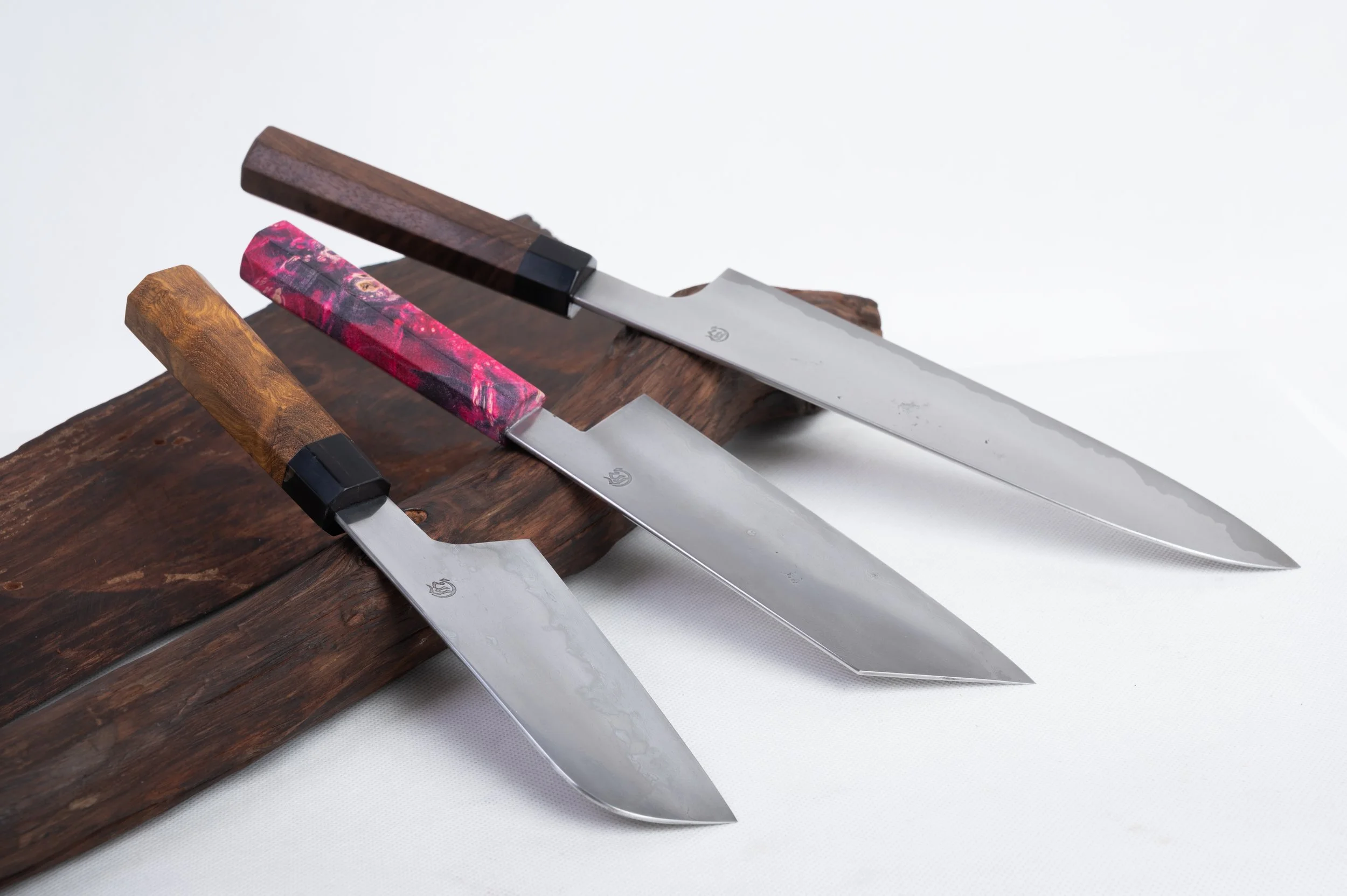
What you get in the 3-knife set
1) The “Katana” of the set: 240mm Honyaki Tamahagane Gyuto (with Hamon)
A true honyaki blade (single steel construction) with a real hamon formed by clay hardening and water quench — not etched, not printed.
Hamon options:
Suguha (calm straight line)
O-choji / Ko-choji (clove waves — bold or tighter)
Notare (rolling waves)
Gunome (rhythmic peaks)
My favourite: “Wild Hamon” — I guide the process, but I let fire, clay, water, and steel decide the final movement. No two will ever match.
2–3) The companions: San Mai Tamahagane Knives (200-year-old iron + tamahagane core)
Two supporting knives built in San Mai: a tamahagane (hagane) core for the cutting edge, wrapped in 200-year-old iron cladding for toughness and deep, one-of-one character.
Customize the feel: Laser or Workhorse
Some cooks want a laser (thin, fast, precise). Others want a workhorse (more support, more confidence, more forgiving).
I can finish your set either way — we’ll match the knives to your cutting style and what you cook most.
Price
3-knife set: $3,400 USD
Forged as a matched set from one tamahagane block — a modern kitchen “daishō,” made with old-world discipline and a bit of controlled chaos.
If you tell me which 2 companion knives you want (common picks: Petty 150mm, Bunka 165mm, Nakiri 180mm, Sujihiki 270mm), I’ll rewrite this as a final, shop-ready listing with your exact lineup.
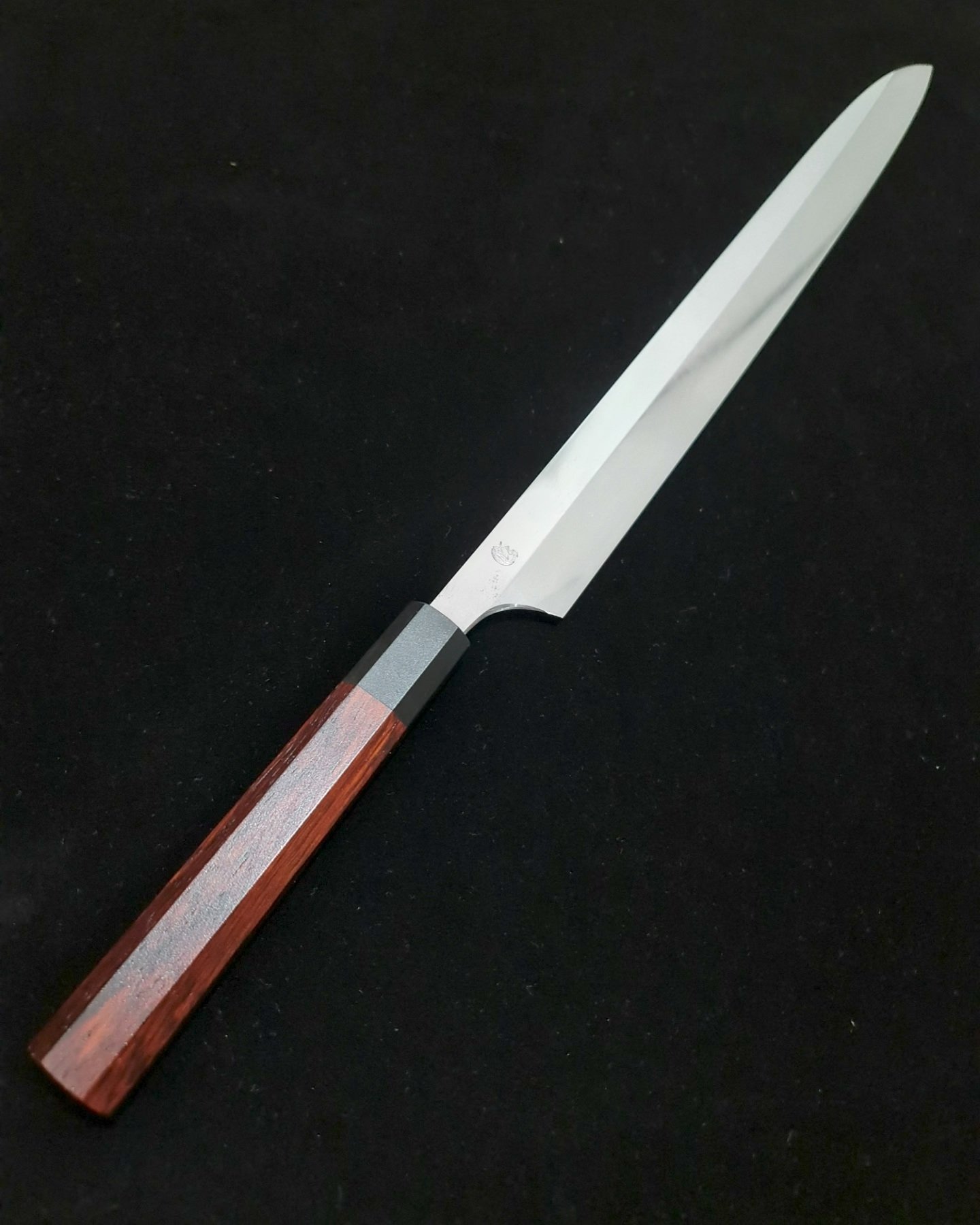
Tamahagane Honyaki Yanagiba 240mm+ — Commission
A Yanagiba is the blade of choice for clean, precise sashimi cuts. But a Honyaki Yanagiba forged from tamahagane is something else entirely — a knife that sits closer to the world of swords than modern kitchen tools.
This 240mm+ Yanagiba is forged as true Honyaki: one piece of Japanese tamahagane, hardened with clay and water quenched to reveal a natural hamon. No cladding. No San Mai. Just tamahagane, shaped by hand, and pushed through a heat treatment that leaves almost no room for error.
That’s why knives like this are rare to see — even in Japan. Tamahagane is sensitive. Long, thin single-bevel blades are demanding. And water quenching can end the work in a second if the steel decides to crack. When it survives, the result is special: a blade with a quiet, almost living presence — and a hamon you can’t fake.
Hamon options (your choice)
Suguha — calm and classic
O-Choji / Ko-Choji — bold or refined clove waves
Notare — flowing wave line
Gunome — rhythmic peaks
My favourite: “Wild Hamon”
For this option, I guide the process, but I don’t force a perfect pattern. I let the elements finish the story — fire, clay, water, and steel decide the final movement. Each one becomes truly one-of-one.
Built to your style
Some chefs want a lighter, faster feel. Others want more strength behind the edge. Before I forge your knife, we’ll talk through:
length (240mm+, 270mm, etc.)
bevel feel and performance
handle style and materials
finish level and polish preference
I can make this knife on commission.
If you want a tamahagane honyaki yanagiba with real hamon — let’s talk.
Please contact me before ordering. There’s a lot to discuss to make sure the knife matches your technique and expectations.

This exquisite hunting knife is hand-forged using the traditional Japanese San Mai technique with high-quality Damascus steel. The blade is paired with an exotic wood handle, adding an extra touch of luxury to its rugged design. The ergonomic handle ensures a comfortable grip, and the knife comes with a custom-fitted leather sheath for safe storage and transport.
*The ordered knives are forged to order, therefore the delivered product may slightly differ from the one shown in the picture. Estimate delivery time is up to 4 weeks.

This hunting knife is a work of art, hand-crafted using the traditional Japanese San Mai technique with high-quality Damascus steel. The unique pattern of the steel adds an elegant touch to the ruggedness of the blade, making it a versatile tool for any hunting expedition. The ergonomic handle ensures a comfortable grip, and the knife comes with a custom-fitted leather sheath for safe storage and transport.
*The ordered knives are forged to order, therefore the delivered product may slightly differ from the one shown in the picture. Estimate delivery time is up to 4 weeks.
Shop By Steel Type
Tamahagane its not just a steel
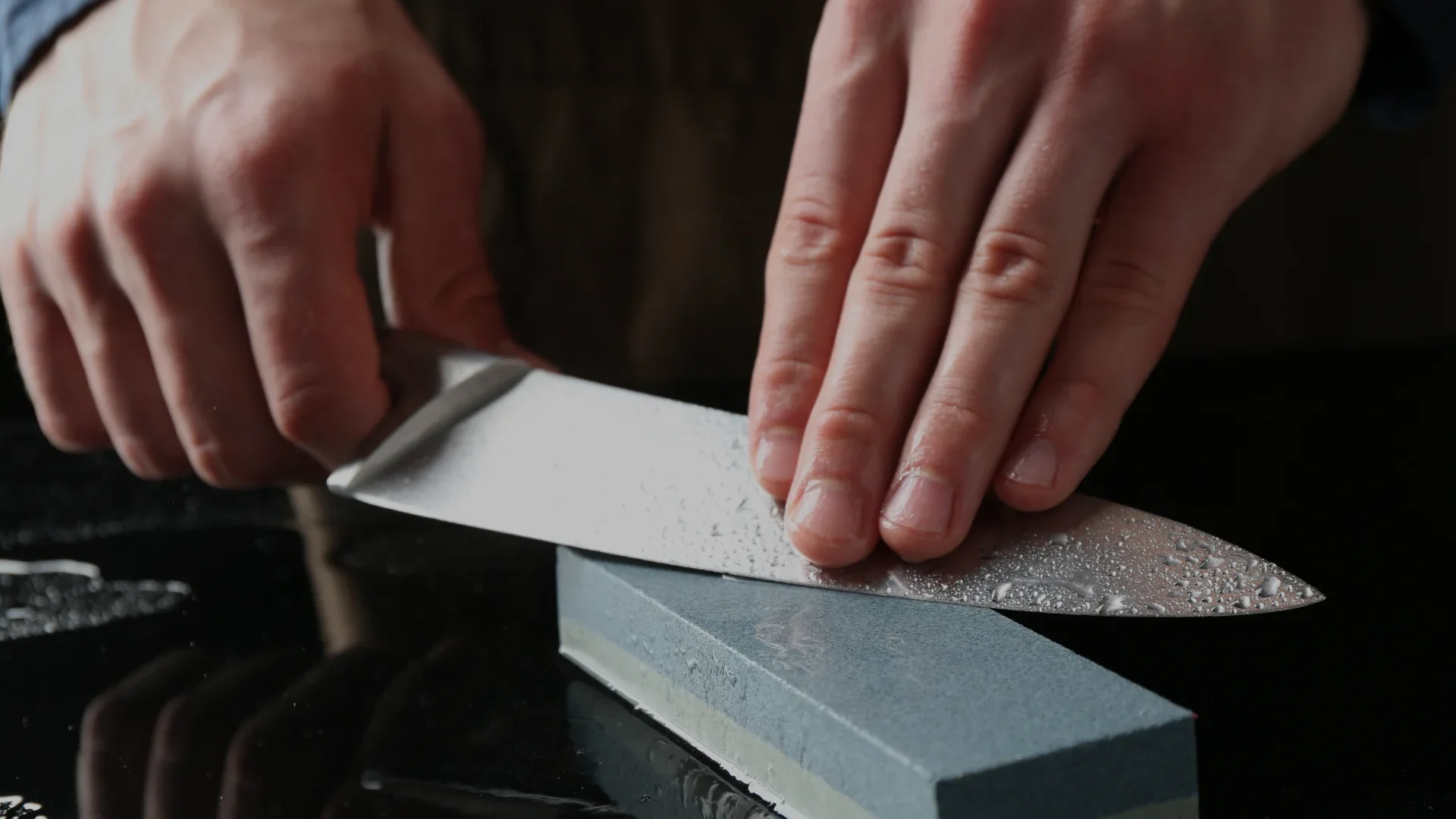
Learn how to sharpen your knives with whetstones. From choosing the right grit to consistent angles and clean burr removal, these guides help you get a sharper edge with less guesswork.
Japanese Kitchen Knife Guides
Explanations and guides on all things Japanese kitchen knives. Knife styles, steel, grinds, care, and real-world use, written to help you choose well and keep your blade performing for years.
What makes two hot bars become one solid piece under the hammer? This guide explains forge welding in plain terms—how it bonds metal without melting, and why it matters in Japanese knife construction. You’ll learn what really decides weld quality: clean surfaces, correct welding heat, and controlled pressure.
Why does a tamahagane steel katana still matter in 2026—beyond whether it can cut? This guide breaks down how tamahagane is made, how the blade is built (including folds and hamon), and what trade-offs it brings versus modern steel.
A blade that looks like a small sword but cuts with scalpel control—why does that matter on a fish board? This guide explains what a sakimaru really is, how a sakimaru takohiki differs in geometry and feel, and why technique matters for clean, single-stroke slices. You’ll also learn what to expect from common lengths (270–330mm), steels, and care.

One clean pull can be the difference between glossy sashimi and torn fish. This guide explains what a yanagiba knife really is, why its long single-bevel geometry matters, and what it’s built to do. You’ll also learn how to choose length and handedness, plus the basics of sharpening and care.

Why does a small blade sometimes feel faster than a chef’s knife? This guide explains what the best japanese petty knife means in real prep—its role, typical 120–150 mm lengths, and where it outperforms a gyuto or paring knife. You’ll also learn how steel, hardness, geometry, and handle shape change control and maintenance.
Ever felt a knife “stay on rails” while working near bones? A japanese deba knife is built for breaking down whole fish—removing heads, opening joints, and pulling clean fillets without the blade wandering. This guide explains its geometry, main types, and how to choose length, bevel, steel, and care.
That sharp, angled tip isn’t just for looks—it changes how the knife works on the board. This guide explains what a bunka is, why the k tip boosts precision, and which cutting motions it favors. You’ll also see how it compares with santoku, gyuto, and petty knives in real prep.
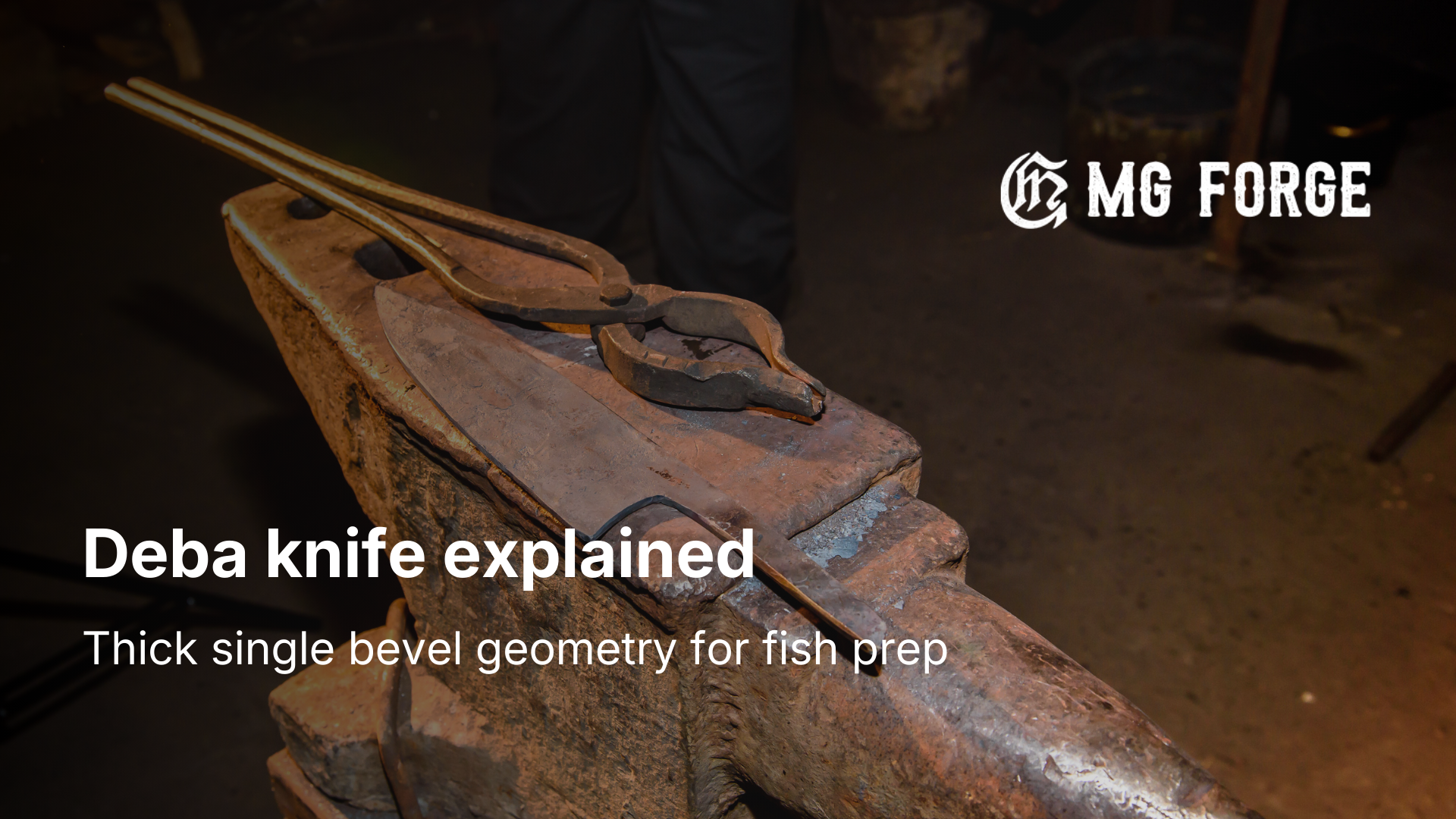
Why does a fish knife need to be thick, heavy, and single bevel? This guide explains what makes a deba different, how it rides close to bone, and where it shines in real fish prep. You’ll also learn what to look for in sizes and materials, plus how to keep the edge sharp and safe.
What makes a sashimi slice look clean in a single pull? A sakimaru knife is a long, single bevel Japanese slicer with a katana-like rounded tip designed for one-stroke cuts through delicate fish. This guide explains how its geometry changes feel, where it sits among common Japanese knife shapes, and how to care for the edge.
240mm Tamahagane Honyaki Gyuto — with Hamon
This 240mm Gyuto is a true Honyaki blade, forged from Japanese tamahagane as a single piece of steel. No cladding, no sandwich layers — just tamahagane, shaped by hand and hardened the traditional way.
To refine the steel, the tamahagane is folded and forge-welded 14 times, creating thousands of layers. This process helps clean and even out the steel, and it leaves a subtle depth in the surface that only hand-forged material can show.
The signature is the hamon: the natural hardening line created during clay heat treatment and water quench. It’s not a “pattern” added later. It’s the visible border between two worlds — a harder edge for cutting, and a tougher spine for strength. And because tamahagane is sensitive and unpredictable, every hamon has its own life.
Hamon styles you can choose
Suguha — straight, calm, classic
O-Choji — larger “clove” waves, bold and bright
Ko-Choji — tighter choji, refined and detailed
Notare — smooth rolling waves, elegant flow
Gunome — round, rhythmic peaks
My favourite: the “Wild Hamon”
This is the one I love most. I don’t force a perfect shape — I let the elements decide. Fire, clay, water, and steel create a hamon that feels raw and alive, with natural movement you can’t repeat. Each “wild” blade is truly one of one.
This knife is made for cooks and collectors who want more than performance — they want a blade with presence, mystery, and a story you can see in the steel.
*The ordered knives are forged to order, therefore the details has to be discussed personally . Estimate delivery time is up to 4 weeks.